
Complete Guide to Integrating Agentic AI into Enterprise Software Architecture
Learn how to integrate agentic AI into enterprise software architecture with proven frameworks, implementation strategies, and real-world examples for scalable automation.
Team
Contributor
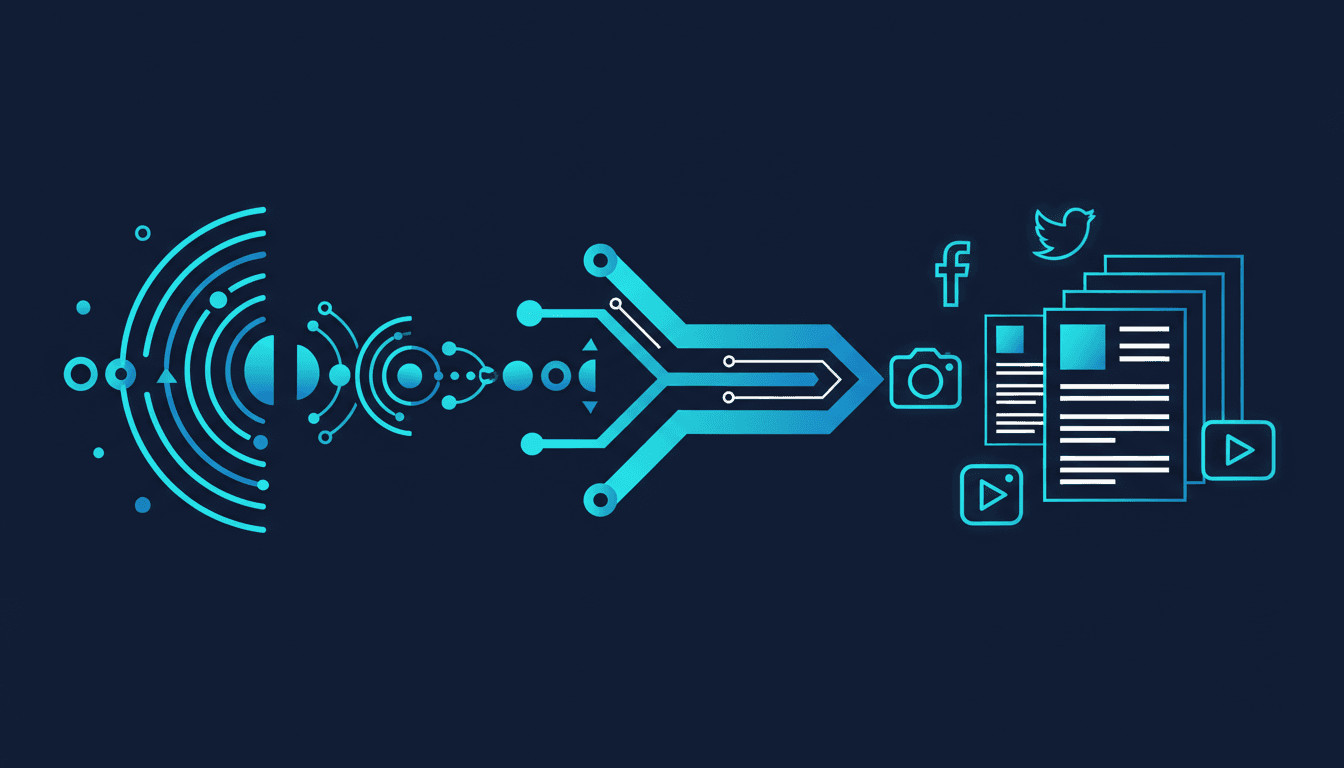
Complete Guide to Integrating Agentic AI into Enterprise Software Architecture
Integrating agentic AI into enterprise software architecture requires a systematic approach that addresses autonomous decision-making, multi-system coordination, and scalable infrastructure. Successful integration involves three core components: establishing clear decision boundaries for AI agents, implementing robust orchestration layers for inter-agent communication, and designing flexible data pipelines that support real-time learning and adaptation across your technology stack.
What Is Agentic AI and Why It Matters for Enterprise Architecture
Agentic AI represents autonomous systems that can perceive their environment, make decisions, and take actions to achieve specific goals without continuous human intervention. Unlike traditional automation that follows predetermined rules, agentic AI adapts to changing conditions, learns from outcomes, and coordinates with other systems to accomplish complex objectives.
For enterprise software architecture, this distinction is transformative. Traditional automation handles repetitive tasks efficiently, but agentic AI tackles dynamic challenges that require contextual understanding and adaptive responses. The business impact is substantial—organizations implementing comprehensive AI strategies report efficiency gains that far exceed isolated automation efforts.
As one technology leader observed: "True 10x efficiency comes from leveraging AI across your entire organization's workflow, not just in isolated use cases. This comprehensive approach is what separates transformational results from incremental improvements."
Key Characteristics of Agentic AI Systems
Autonomy and Decision-Making: Agentic AI systems operate independently within defined parameters, making real-time decisions based on environmental inputs and learned patterns. They don't wait for human approval on routine decisions but escalate complex or high-stakes situations appropriately.
Goal-Oriented Behavior: These systems maintain focus on objectives rather than simply executing tasks. An agentic AI assistant doesn't just process data—it understands the business outcome you're trying to achieve and determines the optimal path to reach it.
Multi-Agent Coordination: Enterprise environments require multiple specialized agents working together. A customer service agent might collaborate with inventory management and logistics agents to resolve a complex order issue, each contributing their domain expertise.
Continuous Learning and Adaptation: Agentic systems improve through experience, refining their decision-making models based on outcomes. This learning happens at both individual agent and system-wide levels.
The Enterprise Architecture Challenge
Integrating agentic AI into existing enterprise architecture presents unique challenges. Legacy systems weren't designed for autonomous agents, security models assume human decision-makers, and organizational processes expect predictable automation behavior. Successfully navigating these challenges requires architectural patterns specifically designed for agentic systems.
Architectural Foundations for Agentic AI Integration
Building enterprise software that effectively supports agentic AI requires rethinking traditional architectural patterns. The foundation must support autonomous operation while maintaining security, governance, and reliability standards.
The Three-Layer Architecture Model
Successful agentic AI implementations typically follow a three-layer architectural model that separates concerns and enables scalability.
Agent Layer: This layer contains the autonomous agents themselves—the AI models, decision engines, and action executors. Each agent specializes in specific domains (customer interaction, data analysis, process optimization) and operates semi-independently within its scope.
Orchestration Layer: The orchestration layer coordinates multi-agent activities, manages workflows spanning multiple agents, and handles complex decision scenarios requiring input from various specialized systems. This layer implements the "conductor" pattern, ensuring agents work harmoniously toward enterprise objectives.
Integration Layer: This foundational layer connects agents to enterprise data sources, external APIs, legacy systems, and business applications. It handles data transformation, security protocols, and communication standards that allow agents to interact with the broader technology ecosystem.
Decision Boundary Framework
One of the most critical architectural decisions involves establishing clear decision boundaries for your agentic systems. These boundaries define what agents can decide autonomously, what requires human review, and what needs multi-agent consensus.
Autonomous Decision Zone: Routine, low-risk decisions that agents handle completely independently. Example: scheduling routine maintenance tasks, categorizing incoming support tickets, or optimizing resource allocation within predefined parameters.
Supervised Decision Zone: Moderate-risk decisions where agents recommend actions but humans maintain approval authority. Example: significant budget allocations, policy changes, or customer relationship decisions with long-term implications.
Collaborative Decision Zone: Complex, high-stakes decisions requiring coordination between multiple agents and human stakeholders. Example: strategic planning, crisis response, or decisions with legal and compliance implications.
This framework prevents both over-automation (agents making decisions beyond their competency) and under-automation (unnecessary human bottlenecks that negate efficiency gains).
Implementation Strategy: From Pilot to Production
Moving from concept to production-ready agentic AI requires a phased approach that manages risk while demonstrating value quickly.
Phase 1: Foundation Building (Weeks 1-4)
Begin by establishing the architectural foundation and selecting your initial use case. The first use case should be high-value but contained—important enough to justify investment, but limited enough to manage complexity.
Infrastructure Setup: Deploy the orchestration platform, establish data pipelines, implement monitoring and logging systems, and set up development/staging environments that mirror production.
Use Case Selection: Choose a process that involves clear inputs and outputs, has measurable success metrics, affects multiple stakeholders or systems, and offers significant efficiency potential. Common starting points include customer inquiry routing, data quality management, or report generation.
Team Preparation: Train technical teams on agentic AI concepts, establish governance structures, and define success criteria with business stakeholders.
Phase 2: Pilot Development (Weeks 5-8)
Develop your first agentic AI capability with close monitoring and iterative refinement. This phase proves the concept and identifies integration challenges before broader rollout.
Agent Development: Build the initial agent with conservative decision boundaries, implement safety constraints and escalation protocols, integrate with existing systems through the integration layer, and establish feedback loops for continuous improvement.
Testing Regimen: Implement comprehensive testing that includes functional testing of agent decisions, integration testing with enterprise systems, performance testing under load, and security testing for potential vulnerabilities.
James - Dev Team specializes in ensuring all software developed meets production-ready standards through rigorous testing frameworks. The objective of the campaign is to make sure all software developed by IC is up to standard and production ready, which is particularly critical for agentic systems where autonomous decisions carry significant business impact.
Phase 3: Controlled Deployment (Weeks 9-12)
Deploy to production with careful monitoring and rollback capabilities. Start with limited scope and gradually expand as confidence grows.
Staged Rollout: Begin with a subset of use cases or user groups, monitor closely for unexpected behaviors or edge cases, expand gradually based on performance metrics, and maintain human oversight during early deployment.
Performance Monitoring: Track key metrics including decision accuracy rates, processing time and throughput, error rates and escalation frequency, user satisfaction scores, and business impact metrics (cost savings, time reduction, quality improvement).
Most organizations achieve measurable ROI within 90 days of production deployment when following this phased approach, with efficiency gains becoming apparent as agents learn and optimize their decision-making.
Phase 4: Scaling and Optimization (Month 4+)
Once the initial implementation proves successful, focus shifts to scaling across the organization and optimizing performance.
Multi-Agent Expansion: Add specialized agents for different domains, implement coordination protocols for multi-agent scenarios, establish shared learning mechanisms, and create agent marketplaces or libraries for reusability.
Continuous Improvement: Refine decision boundaries based on performance data, expand autonomous decision zones as confidence grows, optimize agent models for efficiency and accuracy, and incorporate user feedback into agent behavior.
Technical Architecture Patterns for Scalable AI Integration
Scalable agentic AI integration requires specific architectural patterns that support growth, reliability, and maintainability.
The Event-Driven Agent Pattern
Event-driven architecture enables loose coupling between agents and the systems they interact with. Agents subscribe to relevant events, process them according to their capabilities, and publish results for other systems or agents.
Benefits: This pattern supports asynchronous processing, enables easy addition of new agents without disrupting existing ones, facilitates replay and audit trails for compliance, and scales horizontally as volume increases.
Implementation: Deploy a robust event streaming platform (Kafka, Azure Event Hub, AWS Kinesis), define clear event schemas and contracts, implement event versioning for backward compatibility, and establish event retention policies for audit and replay.
The Agent Mesh Pattern
Inspired by service mesh architectures, the agent mesh pattern treats agent communication as first-class infrastructure concern. A dedicated layer handles service discovery, load balancing, security, and observability for inter-agent communication.
Core Components: The service registry tracks available agents and capabilities, routing intelligence directs requests to appropriate agents, circuit breakers prevent cascade failures, and observability tools monitor agent interactions and performance.
This pattern becomes essential as you scale beyond a handful of agents. Without it, managing inter-agent dependencies and debugging multi-agent workflows becomes increasingly complex.
The Human-in-the-Loop Integration Pattern
While agents operate autonomously, certain decisions require human judgment. The human-in-the-loop pattern seamlessly incorporates human decision-making into automated workflows.
Escalation Triggers: Define clear conditions that trigger human review, implement priority queuing for urgent escalations, provide agents with context to help humans make informed decisions, and capture human decisions to improve agent learning.
Workflow Integration: Integrate with existing workflow management tools, support both synchronous (blocking) and asynchronous escalations, enable humans to override or correct agent decisions, and track escalation patterns to identify opportunities for expanded autonomy.
Data Architecture for Agentic AI Systems
Agentic AI systems require sophisticated data architecture that supports real-time decision-making, continuous learning, and multi-system coordination.
Real-Time Data Pipelines
Agents need access to current, accurate data to make informed decisions. Traditional batch processing introduces latency that undermines agent effectiveness.
Streaming Data Integration: Implement change data capture from operational systems, establish real-time data synchronization across environments, build data transformation pipelines that process streams, and maintain data quality monitoring to catch issues early.
Data Access Patterns: Design for low-latency reads with caching strategies, implement write-behind patterns for non-critical updates, use materialized views for complex queries, and establish data versioning for temporal consistency.
Learning Data Management
Agentic AI systems continuously learn from outcomes. This requires careful management of training data, model versions, and feedback loops.
Feedback Collection: Capture agent decisions and outcomes systematically, record environmental context for each decision, track human overrides and corrections, and aggregate feedback across similar scenarios.
Model Training Pipelines: Automate retraining based on new data, implement A/B testing for model improvements, maintain model versioning and rollback capability, and monitor for model drift and degradation.
Multi-Agent Data Coordination
When multiple agents collaborate, they must share understanding of business entities and state. This requires consistent data models and coordination mechanisms.
Shared Data Models: Define canonical representations of key business entities, implement data contracts between agents, establish master data management practices, and use domain-driven design principles to bound contexts.
State Management: Implement distributed state management for multi-agent workflows, use event sourcing for reliable state reconstruction, establish conflict resolution strategies, and maintain transactional consistency where required.
Security and Governance for Autonomous AI Systems
Autonomous agents introduce new security and governance challenges. Traditional security models assume human actors, but agents operate continuously, make rapid decisions, and coordinate across systems.
Agent Authentication and Authorization
Establish clear identity and access management for AI agents distinct from human users.
Agent Identities: Create unique identities for each agent, implement credential rotation and management, track agent lineage and provenance, and establish agent lifecycle management.
Fine-Grained Authorization: Define permissions based on agent capabilities and decision boundaries, implement dynamic authorization based on context, audit all agent actions for compliance, and establish break-glass procedures for emergency intervention.
Governance Framework for Agentic AI
Enterprise governance must evolve to address autonomous decision-making by AI systems.
Decision Auditability: Log all agent decisions with full context, implement explainability mechanisms showing decision rationale, establish audit trails meeting regulatory requirements, and enable decision replay for investigation.
Risk Management: Classify agents by risk level and impact, implement graduated controls based on risk, establish oversight committees for high-risk agents, and conduct regular reviews of agent performance and compliance.
Ethical Guardrails: Define ethical principles for agent behavior, implement bias detection and mitigation, establish fairness metrics and monitoring, and create mechanisms for human override of concerning decisions.
Real-World Applications and Results
Practical examples illustrate how organizations successfully integrate agentic AI into enterprise architecture.
Multi-Domain Efficiency Transformation
One organization implementing comprehensive agentic AI achieved remarkable results by applying AI across multiple business functions simultaneously. "At Influence Craft, we use the power of AI to 10x efficiency within any organization, whether it be marketing, social media advertising, campaign management, newsletters, and blogs. Our platform demonstrates how one AI solution can transform multiple business functions simultaneously."
This multi-domain approach created compound efficiency gains. AI agents handling content creation collaborated with agents managing campaign optimization and distribution, each contributing specialized capabilities while working toward unified business objectives.
Development and Quality Assurance
Agentic AI transforms software development itself, creating recursive efficiency improvements. "AI doesn't just help with one aspect of business—it creates compound efficiency gains across multiple domains. Not only does AI help 10x building code, building unit tests, and ensuring quality comes first, but it also 10xs the efficiency of creating content and marketing campaigns."
Development teams use agentic AI for code generation, automated testing, quality assurance, and deployment optimization. These agents work alongside human developers, handling routine tasks while escalating complex architectural decisions.
Enterprise-Scale Campaign Management
Enterprise clients often require sophisticated multi-team functionality that simple automation cannot provide. Agentic AI enables complex coordination: "This customer challenge demonstrates how enterprise clients often need sophisticated multi-team functionality rather than simple single-user solutions. The ability to manage separate campaigns while maintaining unified oversight is a key differentiator for enterprise-grade software."
Multiple specialized agents manage different campaigns autonomously while coordinating through the orchestration layer to maintain brand consistency, optimize resource allocation, and achieve enterprise-wide objectives.
Common Pitfalls and How to Avoid Them
Organizations frequently encounter specific challenges when integrating agentic AI. Learning from these common pitfalls accelerates successful implementation.
Over-Automation Too Quickly
The most common mistake is granting agents too much autonomy before they've proven reliable. Start with narrow decision boundaries and expand gradually based on performance data. Implement comprehensive monitoring and establish clear escalation paths.
Neglecting the Integration Layer
Agents are only as effective as their access to enterprise systems and data. Investing in robust integration architecture pays dividends throughout the implementation. Poor integration creates data inconsistencies, increases latency, and undermines agent decision quality.
Insufficient Change Management
Technical implementation succeeds or fails based on organizational adoption. Engage stakeholders early, communicate clearly about agent capabilities and limitations, provide training on working with agentic systems, and celebrate early wins to build momentum.
Inadequate Monitoring and Observability
You cannot manage what you cannot measure. Establish comprehensive monitoring from day one, tracking both technical metrics (performance, errors) and business metrics (decision quality, outcomes). Implement alerting for anomalous behavior and establish regular review cadences.
Ignoring Data Quality
Agents make decisions based on available data. Poor data quality leads to poor decisions, undermining confidence in the entire system. Invest in data quality initiatives, implement validation at ingestion points, and establish data governance practices.
Frequently Asked Questions
What's the difference between agentic AI and traditional automation in enterprise software?
Traditional automation follows predetermined rules and workflows—if X happens, then do Y. Agentic AI makes autonomous decisions based on goals and context, adapting its approach to changing conditions. While automation excels at repetitive, predictable tasks, agentic AI handles dynamic situations requiring judgment, learns from outcomes to improve future decisions, and coordinates with other agents to solve complex problems.
How long does it take to see ROI from agentic AI integration?
Most organizations achieve measurable ROI within 90 days of production deployment when following a phased implementation approach. Early wins typically come from efficiency gains in the initial use case—reduced processing time, fewer errors, or improved customer satisfaction. Compound returns accelerate as you expand to additional use cases and agents learn to optimize their decision-making. The key is starting with high-value use cases that demonstrate clear business impact.
What infrastructure is required to support agentic AI at enterprise scale?
Enterprise-scale agentic AI requires robust event streaming platforms for real-time data, orchestration layers for multi-agent coordination, secure API gateways for system integration, monitoring and observability tools, model training and deployment infrastructure, and scalable compute resources (often cloud-based). However, you don't need everything on day one. Start with core capabilities for your pilot use case and expand infrastructure as you scale.
How do we ensure security and compliance with autonomous AI agents?
Security and compliance require implementing unique agent identities with granular permissions, comprehensive audit logging of all decisions and actions, decision boundary frameworks that escalate high-risk scenarios, regular reviews of agent behavior and outcomes, and clear governance structures with human oversight. Treat agents as privileged system users with appropriate controls, monitoring, and governance. Establish clear policies around data access, decision authority, and escalation procedures.
What skills does our team need to implement and manage agentic AI systems?
Successful agentic AI implementations require cross-functional expertise including AI/ML engineering for agent development and training, software architecture for system design and integration, DevOps/MLOps for deployment and monitoring, data engineering for pipeline development, and business analysis to define use cases and success criteria. Many organizations partner with specialists like James - Dev Team to ensure production-ready implementation while building internal capabilities. The objective is to make sure all software developed meets enterprise standards from day one.
Getting Started with Your Agentic AI Journey
Integrating agentic AI into enterprise software architecture represents a significant undertaking, but the potential returns justify the investment. Organizations achieving 10x efficiency gains share common characteristics: they start with clear use cases and measurable objectives, build solid architectural foundations before scaling, maintain focus on business outcomes rather than technology for its own sake, and invest in change management alongside technical implementation.
Begin by identifying a high-value use case where autonomous decision-making offers clear benefits. Assess your current architecture and identify integration requirements. Establish the governance framework and decision boundaries. Then pilot, measure, learn, and scale.
The transformation from traditional enterprise software to intelligent, adaptive systems powered by agentic AI is not instantaneous. It requires thoughtful planning, robust architecture, and organizational commitment. But organizations that successfully navigate this transition position themselves to operate at unprecedented levels of efficiency and effectiveness.
If you're ready to explore how agentic AI can transform your enterprise software architecture, consider partnering with specialists who understand both the technical requirements and the organizational change necessary for success. Production-ready implementations require attention to quality, security, and scalability from the start—there's no room for shortcuts when autonomous systems are making business-critical decisions.
Share
Related Articles
Best Multi-Channel Marketing Campaign Management Tools for Enterprise Teams in 2026
Best Multi-Channel Marketing Campaign Management Tools for Enterprise Teams in 2026
Top AI Tools Transforming Lead Generation for Marketing Agencies in 2026
Discover the top AI lead generation tools transforming marketing agencies in 2026 — from agentic workflows to voice-to-pipeline platforms that scale results fast.